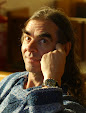


In January and February in Tiruvanamali, it is the satsang season. Some great teachers come, including the lovely Mooji (www.mooji.org) and the very skilful teacher, Miranda McPherson (www.awakeningwithmiranda.com). It draws many hundreds of Westerners to the sacred mountain of Arunachala with the ashram of Ramana Maharshi at its foot. Indians don't seem to be that interested in these satsangs. The Westerners range from some accomplished practitioners of meditation and self-enquiry (Ramana's method), via many earnest seekers after Truth; to the seriously lost and confused. Some have come mainly to party, avoid their life and drift around India for as long as possible.
I met a beautiful, intelligent young French woman who had been living for several months in a cave high on the mountain. She came to Arunachala to die and seemed a little disappointed that she hadn't died. I believe that as a teenager she attempted suicide a few times and that wouldn't be surprised if that didn't include the slow suicide of anorexia. I suggested to her that La petite mort est mieux que la grand mort (orgasm is better than death) in the hope that she would wake up to the difference between physical death with its wish to separate from the body; and the letting go of the small controlling ego which knows only fear. Surrender into the body, into life and into love is what is appropriate for women in their 20's not trying to kill themselves. Ego death and physical death are very different and the confusion is behind some suicide attempts; whether the exotic spiritual ones, or the more usual attempts. Tantra is clear on all this - practice letting go into the life of the body, the sexual life of pleasure and bliss. Do this with great with great awareness. Tantra is as old as Advaita and not opposed to it. So much of the spiritual teaching of India, including Advaita Vedanta and yoga teachers are only interested in the top three chakras of the body; heart, throat and third eye!
Arunachala is very connected to Ramana Maharshi's life giving Advaita teaching and his powerful method of self enquiry (Who Am I?). The problem with this is that it is only one method and doesn't suit all. It tends to the ascetic and non-relational. If I am consciousness without any limits then there can be nothing outside to relate to. Ramana's main relationships (apart form his mother whom he tried to get away from but she came along anyway) were with Arunachala, the mountain itself and with a cow! The 20' and 30' something people; particularly the women, need to connect to their bodies, their senses, their sensuality and their sexuality and celebrate life. Most will be in relationship and have children. The only method their are being taught - self enquiry, doesn't acknowledge or relate in any way to that and by omission gives a life of asceticism and internal enquiry. They also don't realise that in India many of these spiritual practices were for men over 50 who had already had a career and brought up a family. Tantra teaches methods which embrace life, relationships and the world as part of a spiritual practice. See (www.tantra.uk.com). Perhaps we should run some tantra taster workshops near Arunachala next satsang season!


